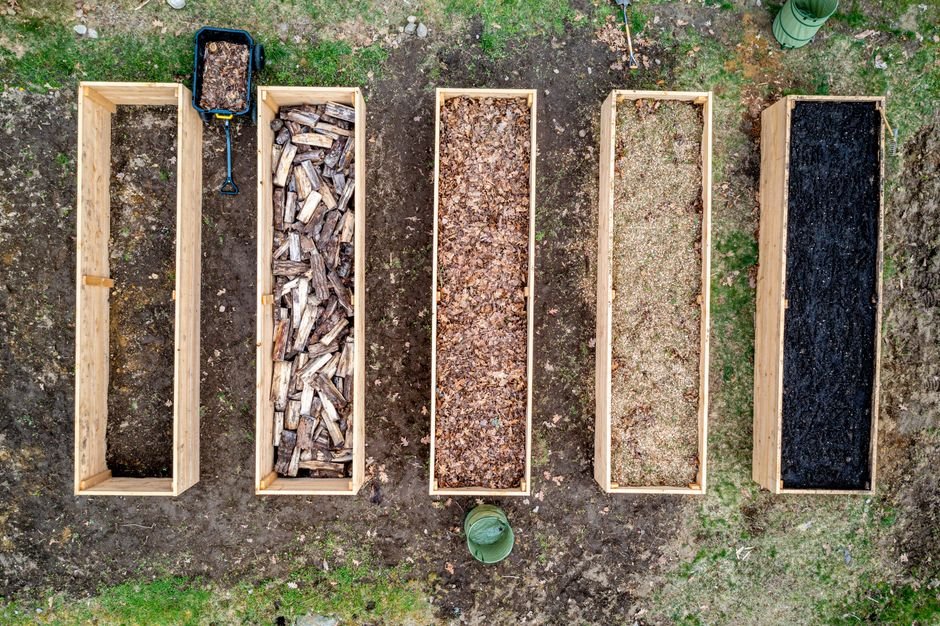
The tomatoes in my back left bed were a disappointment three years running, and it took me until the third year to notice the pattern. The plants came up, grew to about waist height, and then went a tired yellow from the bottom, with brown-edged leaves creeping upward while the plants were still trying to set fruit. I got tomatoes, but small ones, from plants that looked half dead by August. Meanwhile the same seedlings from the same tray, planted in the bed six feet away, were fine.
I had been treating my four beds as four identical containers. They are not. They are four small patches of ground with three years of history in them, and I had been planting the same family in the same box every single year because that was where the trellis was.
The bed that stopped growing tomatoes
I never had it diagnosed, and I want to be clear about that. I am not a plant pathologist and I did not send anything to a lab. What I know is that the symptoms matched the general description of the soilborne troubles that build up when you grow the same family in the same soil repeatedly, and that the problem was tied to the location rather than to the plants or the weather.
What convinced me was the swap. I moved the tomatoes to the bed that had grown beans and then garlic, and put beans in the old tomato bed. The tomatoes came back to normal. The beans in the old bed did fine, because whatever was in that soil was not interested in beans. That is the entire argument for rotation in one experiment I did not mean to run.
Textbook rotation assumes a farm
Every time I looked for guidance I found the same thing: careful multi-year sequences involving heavy feeders, light feeders, legumes, and root crops, laid out in diagrams that clearly assumed a field with many sections and a farmer who plants in blocks. With four beds, and with the fact that I want tomatoes and beans and greens every year regardless of what the sequence says, the pure version is unusable.
The other thing those diagrams do not account for is that my beds are not equivalent. One gets afternoon shade from a neighbor’s maple. One is closer to the spigot and therefore, realistically, gets watered more. A rotation that ignores this sends the tomatoes into the shady box every fourth year and wastes a season.
My groups, kept deliberately crude
What I actually use is four groups, one per bed, rotated one step over each year. The tomato and pepper family in one. Beans and peas in another. Brassicas and leafy things in a third. Roots, alliums, and whatever else does not fit in the fourth. That is it. No sub-sequences, no soil amendment schedule tied to position, nothing I would have to look up.
The rule I break most often is the shady bed. When the rotation sends tomatoes there I cheat and swap them with the beans, because beans handle the shade better and I would rather bend the system than lose the tomato crop. Bending it means the nightshades land in that bed less often than they should, and I have made peace with that. A rotation I actually follow, imperfectly, is better than a perfect one I abandon in May.
The notebook is the whole system
None of this works without a record, because by the following spring I genuinely cannot remember what was where. Everything is bare soil, all four beds look identical, and my memory of last July is unreliable. For two years I told myself I would remember. I did not, and I planted tomatoes back in the tomato bed at least once by accident.
Now I keep a page per year in a cheap notebook that lives in the garage. A rough sketch of four rectangles, what went in each one, and a couple of lines at the end of the season about what did well and what did not. It takes a few minutes twice a year. It is the highest value thing I do in the garden and it involves no plants at all.
Resting a bed and cover crops
The idea of leaving a bed empty for a season made me deeply uncomfortable at first, because a quarter of my garden doing nothing feels like waste. I have come around partway. What I do instead of true rest is put the least demanding thing I have into the tired bed. Garlic over winter, or a patch of bush beans, or just cooking greens.
I have tried a cover crop over winter twice with mixed results. The first sowing came up thin and patchy, mostly because I got it in the ground too late for my area, and I got a bed of weeds with some rye in it. The second time went better and the bed felt looser in spring when I dug it. If you try this, the timing is genuinely regional and the seed needs to go in earlier than feels necessary, so ask someone local rather than following a date you read.
What rotation did not fix
Rotation did nothing for my pest problems, which surprised me, because the books imply otherwise. The cabbage worms found the brassicas no matter which box they were in, since the butterflies simply fly over and inspect all four. Moving crops around within a space this small does not confuse anything that has wings.
It also did not fix drainage, or the fact that one bed has heavier soil that stays wet after rain. Rotation manages one specific problem, which is soilborne trouble accumulating under a repeated crop family, and it manages it well. I spent a season expecting it to be general purpose garden insurance, and it is not. It is one narrow tool that cost me nothing except the discipline to write down where things went.