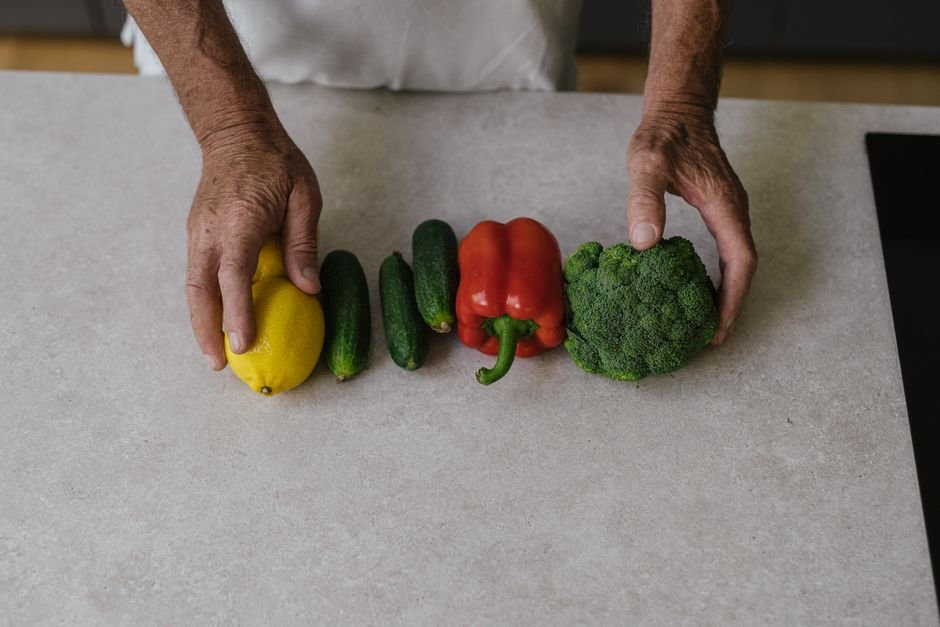
On a Sunday morning two summers ago I opened the crisper drawer looking for a lemon and found a produce bag with about two inches of cloudy liquid in the bottom of it. That had been eleven cucumbers on the previous Tuesday. I had picked all of them in one go, been very pleased with myself, put them in a bag, and then not thought about them again for five days. I carried the bag out to the compost at arm’s length and did not say anything about it to anyone in the house.
That same week I threw out a colander of green beans that had gone rubbery and a bunch of chard that had turned to dark slime around the stems. I estimate I composted more food that week than I ate out of that garden. It was the low point, and it was the week I finally understood what was actually going wrong.
The glut is a planting problem before it is a kitchen problem
My first instinct was to get better at preserving. Buy jars, learn to pickle, get a vacuum sealer. That is treating the symptom. The real cause was that in April I had sat down with seed packets and planted every single cucumber, every single bean, and every single lettuce on the same afternoon, because that was the afternoon I felt like gardening.
Plants that go in the ground on the same day come ready on the same day. I had built a machine that produces nothing for two months and then produces forty pounds of the same three vegetables in nine days. Then I stood in my kitchen and blamed my refrigerator.
The fix is boring and it works. I now plant beans in three small batches spaced about two weeks apart, and lettuce in even smaller batches more often than that. Total yield across the season is roughly the same. The difference is that it arrives at a rate a household of two can actually chew through. I have not made a single jar of pickles since, and I also have not composted a bag of cucumber soup.
Cook it down before you store it
Where I still get a pile, I have learned to reduce it in volume the same day rather than store it whole. Whole vegetables in the drawer are a promise to my future self, and my future self is a flake. Something already cooked is a meal that is most of the way finished, and it gets eaten.
Too many tomatoes means the oven goes on that evening. Halves, cut side up, a lot of oil, a low oven, and they sit in there for a long stretch while I do something else. They come out collapsed and dark at the edges and take up a quarter of the space they did going in. That goes in a jar under a film of oil and gets used on toast, stirred into rice, pushed onto pasta with nothing else. It is not a technique, it is just leaving them alone in the heat until they look done.
Too many greens means everything gets wilted in a pan with garlic and pressed into a container. A grocery bag of chard becomes something the size of a fist. Too much zucchini means it gets grated and squeezed hard in a towel over the sink, which pulls out a shocking amount of water, and then it is a compact green pile that goes into eggs all week.
My freezer has lied to me repeatedly
For a while I believed the freezer solved everything. It does not. It converts a decision I do not want to make today into a decision I will not make in February either.
I have found bags of blanched beans from a summer I no longer remember. I froze whole tomatoes once and they came out as bags of red ice that were fine in a long simmer and useless for anything else. I froze basil leaves flat on a tray and they turned black and I still cannot bring myself to look at that container.
What actually gets eaten out of my freezer is only the stuff that is already a meal or one step from it. A container of tomato sauce gets used. Cooked greens get used. Soup gets used. Raw ingredients in bags do not get used, they get archived. So I stopped freezing raw anything and my February cooking got a lot better.
Giving it away is a skill I was bad at
The other release valve is other people, and I was clumsy at it for years. Showing up at a neighbor’s door with a shopping bag of zucchini is not a gift, it is a transfer of my problem. Half the time I could see the polite panic on their face.
What works is smaller and specific. Four things, not twenty. Told in advance so it is not an ambush. Ideally something they mentioned liking. I gave a coworker a paper bag with six tomatoes and a handful of basil and she texted me a picture of what she made, which never once happened when I dumped a whole crate on someone.
I also stopped waiting until I was drowning. If I hand off a little in the first week of a heavy stretch, I am ahead of it. If I wait until I am desperate, I am pushing food on people who can tell they are being used as a compost bin with a doorbell.
What I do now on a heavy Saturday
The routine is short. I bring in everything that genuinely has to come in, and I sort it on the counter into three piles before I do anything else. Eat this week, cook down today, give away today. Nothing goes in the refrigerator until it has a pile.
The eat this week pile has to be small enough that I can name the actual dinners it belongs to. If I cannot name them, it is not that pile, it is one of the other two. That single question, what meal is this for, has done more for my waste than any jar or bag or gadget.
I still lose things. A head of cabbage got away from me in June and I found it in the back of the drawer looking like something from a science exhibit. But I have not thrown out two inches of cucumber liquid since, and I no longer feel that particular flavor of guilt on a Sunday morning.