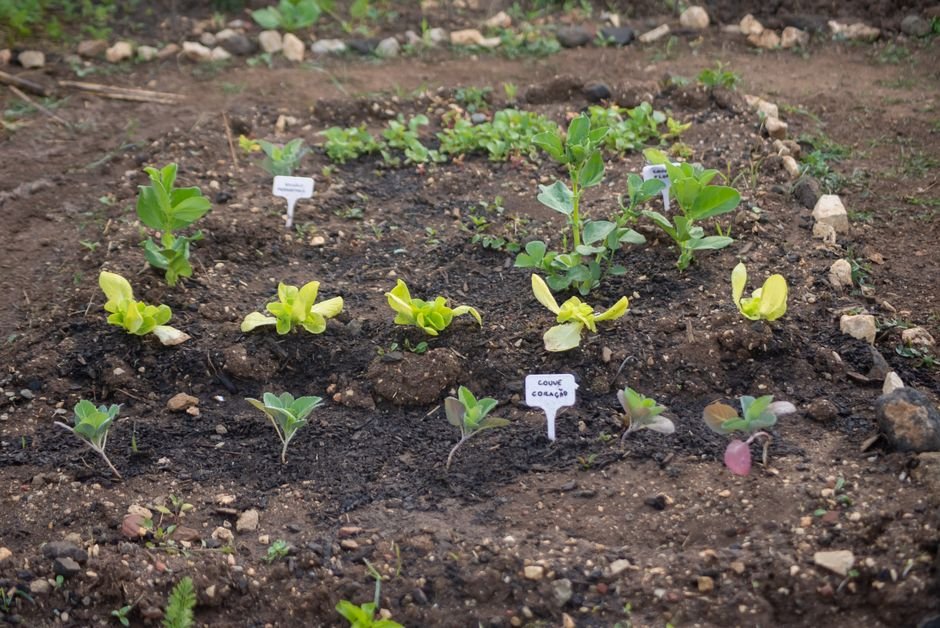
Two springs ago I put a flat of tomato and pepper seedlings into the ground on a warm Saturday because the forecast for the week looked friendly and I was impatient. Wednesday night it dropped hard. Not a freeze, just a genuinely cold night with wind, and I had not covered anything because it was not going to freeze. The peppers stopped. Not died, stopped. They sat there for close to three weeks doing nothing at all while the ones I put out later caught up and passed them.
That is the failure that shaped how I decide now. Cold does not have to kill a plant to cost you the whole month.
Hardening off is boring and it works
Everything about a seedling grown indoors is soft. It has never had real sun on it, never been shoved by wind, never had its soil dry out from the side. Take it from a shelf to full sun in one move and the leaves burn. I have seen that happen in a single afternoon: white and papery patches on the upper leaves by evening, on plants that looked perfect at breakfast.
So I do the tedious thing. The tray goes out into shade for a short stretch, then out for longer, then into partial sun, then into full sun, then it stays out overnight before anything goes in the ground. This takes about a week and a half of me carrying a tray in and out, which is not glamorous and is easy to skip. I have skipped it. Skipping it costs more time than doing it.
The mistake inside the routine is leaving the tray out in the sun during the first few days and forgetting it. A shallow cell in wind and sun dries out startlingly fast. I lost half a tray of brassicas that way, on a day when I set them out before work and remembered them at dinner.
Reading the plant instead of the calendar
I no longer plant to a date. Dates in my garden lie, partly because my yard runs colder than the neighborhood generally and partly because spring here has never once behaved the same way twice. What I read instead is the plant and the ground.
The plant should have a few sets of real leaves past the seed leaves, a stem that feels substantial when I brush it, and roots that hold the plug together when I tip it out but are not wound in a tight mat at the bottom. If the root ball falls apart in my hand, it is early. If it comes out as a solid white spiral, it is late and I should have potted it up a while ago.
The ground should be workable rather than wet. If I squeeze a handful and get a muddy patty, I wait. Working soaked soil ruins the structure for the rest of the season and I have never once regretted waiting a week.
The weather I actually watch
Not the daytime high. The nights, and the wind. A run of mild days with cold nights is exactly the situation that stalled my peppers, and a warm afternoon is very good at convincing you otherwise.
I also try not to plant on a bright still day. Overcast is better, and the evening before a couple of gentle days is better still, because it gives the plant a night to settle before it has to deal with sun. This is folk wisdom rather than science as far as I know, but it matches what I have seen in my own beds.
How early any of this happens where you are, I genuinely cannot tell you. It is different across a single town, let alone across a country. The back of the seed packet and whoever runs your nearest real nursery will both know your conditions better than I do.
The transplant itself, and the root I broke
My worst transplanting habit used to be pulling seedlings out by the stem. It works right up until it does not, and when it does not you are holding a plant with a crushed stem and a lot of its roots still in the cell. Now I squeeze the bottom of the cell, tip the whole thing into my palm, and support the root ball rather than the plant.
Even so I have torn roots. Last year I had a squash that was a bit too big for its pot, and when it came out the root ball split in two and half of the roots stayed behind. I planted it anyway, out of stubbornness. It survived, and it fruited weeks behind its siblings, and the fruit was fine. So the lesson is not that a torn root is fatal. The lesson is that it costs you time you cannot buy back.
I water the hole before the plant goes in rather than only after, I firm the soil enough that there is no air pocket around the roots, and I water again properly once it is in. Tomatoes go in deep, with the lower leaves stripped off, because they root along the buried stem. Almost nothing else appreciates that treatment.
What I do the first week after
New transplants get watched. Not fussed over, watched. Anything wilting at midday but recovered by evening is normal and I leave it alone. Anything still flat in the morning has a real problem, usually roots that never made contact with the soil.
If a cold night sneaks in, I cover. A cardboard box, an upturned bucket, an old sheet on stakes, whatever is in the garage. It looks ridiculous in the yard and it has saved me weeks.
And I stop myself from planting the whole flat on one day. Splitting it across two weekends is the cheapest insurance I know. If the first weekend turns out to be too early, I have not lost the crop, I have lost half of a crop and learned something for free.
The reason any of this matters
All of it comes down to the plate. A pepper that stalls for three weeks in cold soil is a pepper that ripens right when the season is running out, which is the difference between eating them and watching them sit green on the plant until you give up and cook them green. A tomato that goes out into ground that is genuinely ready starts growing immediately and gives you the long middle stretch of summer where you have more than you can eat. That stretch is the whole reason I do this, so I have gotten patient about the two weeks that buy it.