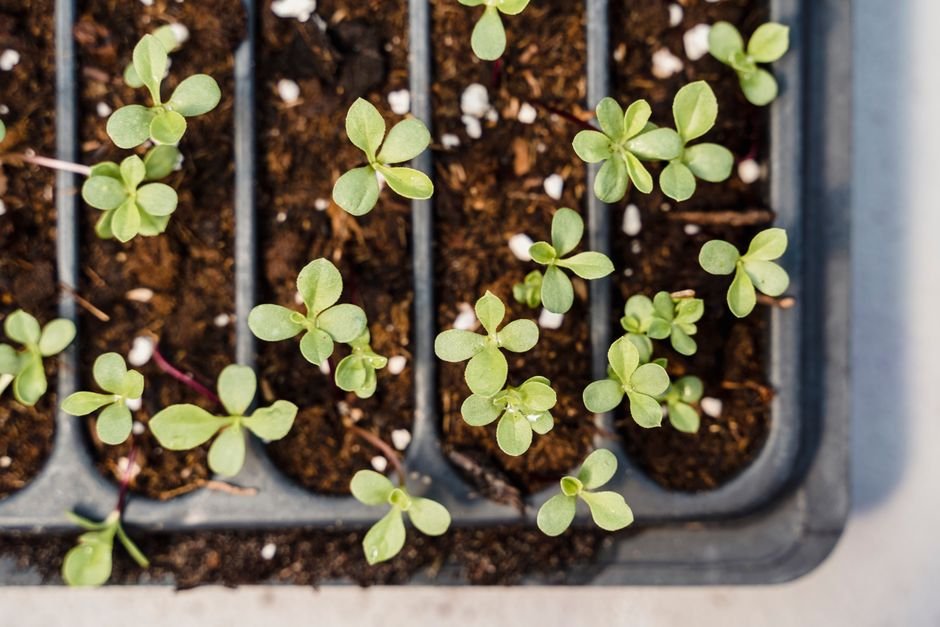
On the first Saturday of March I had forty cells of bean seedlings taking up the entire kitchen counter, under a secondhand shop light clamped to a bookshelf, and my wife asked why the kitchen smelled like a wet basement. I did not have a good answer. I had a better question that I did not say out loud, which was: why am I growing beans in cells at all?
Beans go in the ground. They come up fast, they hate having their roots handled, and by the time I had hardened those seedlings off and set them out, a neighbor who sowed his straight into the soil on the same weekend had plants the same size with none of the laundry-room drama. Mine sulked for two weeks. Three of them never really came back. That was the year I started keeping an honest list of what actually earns a spot under the lights.
The bean incident
I want to be fair to the version of me who did that. Starting seeds indoors feels like being ahead of something. It is early spring, the beds are cold mud, and there is real satisfaction in a tray of green on a gray weekend when nothing outside is happening. The problem is that the satisfaction was mine, not the plant’s. The bean did not need me. The bean needed warm soil and to be left alone.
What I had actually done was invent three new ways to fail. I could overwater a tray and lose everything to rot at the soil line. I could grow something pale and stretched under a light hung too far away. And I could tear roots on the way out of the cell, which is exactly what happened, because bean roots go straight down fast and mine had already circled the bottom of a cell that was too small. I pulled one out and heard it. If you have ever heard a root break you know the sound is more of a feeling.
What earns a spot under the lights
Here is my short list, for my garden, on my weekend schedule. Things with a long road ahead of them, and things that do not mind being moved.
Tomatoes, peppers, and eggplant. These want a head start before the weather turns kind, and they move into a bed without holding a grudge. Tomatoes in particular seem to enjoy being planted deeper than they were sitting in the pot. Leeks and onions, because they will sit patiently in a tray for a long stretch without turning into a problem. Broccoli, kale, and cabbage, mostly because a seedling that already has a few real leaves survives slugs better than a seed leaf does, and slugs are the actual boss of my back bed.
Basil goes on the list too, but for a selfish reason. I eat a lot of it and I want it early. Parsley I have started both ways and I cannot honestly tell you the indoor version ever got me anything I would notice on a plate.
What I direct sow now, no argument
Beans and peas, obviously, given how I learned. Corn, when I bother with corn. Anything with a taproot that resents being disturbed, which covers carrots, beets, radishes, and turnips. Salad greens and spinach and arugula, because they germinate willingly and grow fast enough that a head start buys me almost nothing. Cilantro and dill, which both seem to take transplanting as a personal insult and respond by bolting.
Squash and cucumbers sit in the middle for me. They are technically transplantable if you move them while they are small and you are gentle, but they catch up so fast from seed that I usually do not bother. The one exception is a year when the spring is wet and the seeds keep rotting in the ground. Then I will start a few in larger pots as insurance and put them out while they are still young.
The part nobody warns you about
The hidden cost of a windowsill nursery is not money. It is attention, and attention is the thing I have least of. A tray of seedlings under a light needs checking most days. Not a lot of work, but the kind of small recurring obligation that is easy to drop when a weekend gets busy. I have come home on a Sunday evening to a tray that went bone dry on a warm afternoon, and there is no fixing that. The seedlings that survive are never quite right afterward.
Then there is hardening off, which eats two weekends. You carry the tray out, you carry it back in, you forget it in wind, and you lose a few. All of that is fine if the plant genuinely needed the head start. It is a lot of ceremony for a bean.
The three questions I ask now
Before anything goes into a cell I ask: does this plant actually need more season than my climate gives it, does it tolerate being moved, and do I have the light to grow it well until it goes out. If the answer to any of those is no, the seed goes in the ground when the ground is ready.
On timing I have stopped trusting anything I read on a blog, including this one. Every yard is its own little climate, and the difference between my back bed and the strip along the south wall of the house is bigger than I would have believed. The instructions on the seed packet are written by people who grow that crop at scale and they are more reliable than anything I could tell you. What I do trust myself on is the feel of it: soil that is workable rather than sodden, a stretch of days that are not about to turn cold, and a hole about as deep as the first joint of my finger for the bigger seeds, shallower for the small ones. That is a rough rule that has kept me out of trouble, and the packet corrects it when the packet disagrees.
What actually changed on the plate
Cutting the indoor tray roughly in half made the eating better, which was not what I expected. I stopped spreading my attention across sixty cells of things that did not need it, and the tomatoes and peppers that were left got treated properly. Bigger stems, better light, no stretch. And the beans, sown directly into warm soil, gave me more than we could eat, which is how I ended up eating green beans three ways in one week and discovering that the third way was the best one. That is a separate post.