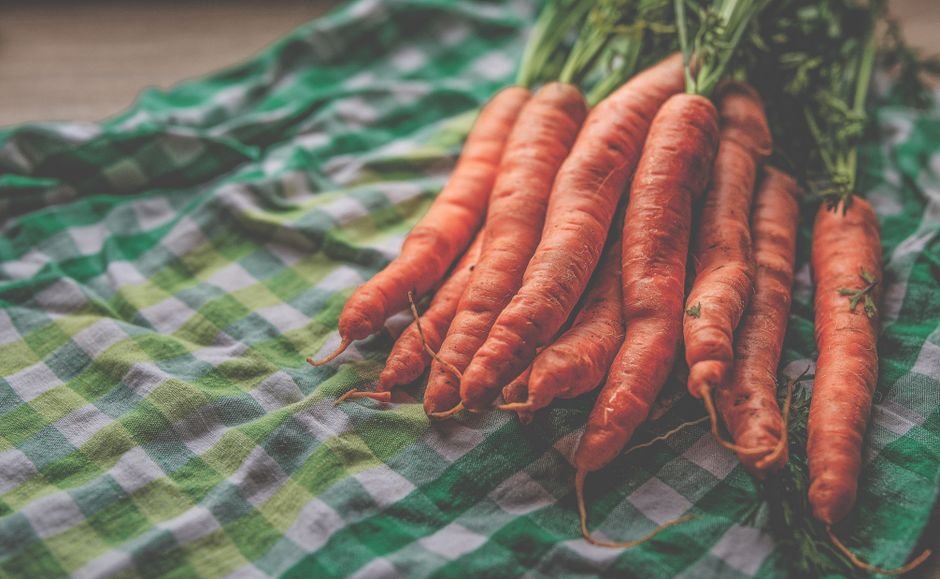
Last spring I pulled a handful of carrots, washed them, and set them on a cutting board next to a bunch of ordinary carrots from the grocery store. I had a friend over and I made a small production of it. Two plates, no labels, both of us tasting. I fully expected to win.
She picked the store carrot as sweeter, and after tasting them again, so did I. Mine had a stronger, greener, more distinctly carroty flavor, which I liked, but the store one was noticeably sweeter and had a better snap. I had grown them in heavy soil, pulled them a bit early, and picked a variety I chose mostly because the packet had a nice picture on it.
That afternoon knocked something loose for me, and I have been trying to be honest about this question since.
Where the difference is enormous
There are crops where the gap is not close, and it is not my imagination. Tomatoes are the obvious one. A tomato picked fully ripe and eaten within a few hours is a different eating experience from one picked firm and shipped, and the difference is not subtle. The texture alone gives it away, because the ripe one is soft enough that it would not survive a truck.
Green beans are the second one I would defend hard. Fresh off the plant they have a sweetness and a snap that I have never found in a store, even at good markets. Same for peas, which seem to go dull faster than almost anything else I grow. Everyone says the sugar in peas turns to starch quickly and my mouth agrees with them, because a pea eaten standing in the bed and a pea eaten four days later taste like two different vegetables.
Herbs are almost unfair. Basil cut ten seconds before it goes in something is not comparable to a plastic clamshell. Cilantro and dill are the same story.
Lettuce and salad greens belong here too. Not because the flavor is dramatically better, though it is a bit greener and more bitter in a good way, but because the texture is completely different. Store lettuce has usually been cold and wet for a week and it has gone limp in a way you stop noticing until you eat the alternative.
Where there is basically no difference
Then there is the category where I have to admit I am growing things for reasons other than flavor. Onions are the clearest example. My onions taste like onions. A cured storage onion has already been sitting for weeks by the time I use it, and so has the one from the store, and I cannot tell them apart in a pan.
Garlic is roughly the same, with the exception of green garlic in spring, which is genuinely a different ingredient and worth the space. Potatoes are close. New potatoes fresh out of the ground are better, noticeably, but by December my stored potatoes and store potatoes are the same potato.
Winter squash surprised me. I expected a big gap and there is not one. A butternut is a butternut, and mine are frequently worse because I do not always cure them properly.
Freshness is doing most of the work
The pattern is not really about home versus store. It is about how many hours have passed and how ripe the thing was allowed to get. Everything in my first list is a crop that either declines fast after picking or has to be shipped underripe to survive transport. Everything in my second list is a crop that stores well by design, which means the supply chain does not hurt it much.
That reframing was useful because it told me the advantage I actually have is not soil or care or love. It is proximity. The bed is forty steps from the stove. That is the entire edge, and it only matters for things where forty steps versus four days makes a difference.
Variety choice matters more than I thought
The carrot test also taught me that what I chose to plant was doing more than how I grew it. Commercial varieties have often been selected for sweetness and uniformity, and some of them are genuinely good. The interesting heirloom I pick out of a catalog because it has a story attached is not automatically better tasting, and a few have been worse.
I have grown a beautiful striped tomato that was watery and bland two years running. I have grown a plain red one that I now plant every year because it is reliably delicious. Looks and rarity have almost no correlation with how something tastes on my table, and I fell for that a lot in the early years.
What I plant now, knowing all this
My planting list has narrowed. The beds are mostly given over to things where the freshness advantage is real. Tomatoes, beans, peas, lettuce and other greens, herbs, cucumbers. Those are the crops where I get something at dinner that I could not otherwise buy.
I still grow a few onions and potatoes, but I stopped pretending it is about flavor. It is about liking to have them there and enjoying pulling them up. That is a completely fine reason and I do not need to dress it up.
The carrots stayed too, but I changed varieties and I stopped pulling them early, and last year they were better than the ones I lost to. Not dramatically, but better. That was three seasons of adjustment for one modest improvement, which is roughly how the whole hobby goes.
The part that is not about taste
The honest answer to whether it tastes better is that about half of it does and half of it does not, and I would keep doing it either way. Something about having grown a thing changes how much attention I pay to it while I am eating it, and attention makes food taste better. That is not a claim about the vegetable, it is a claim about me, and I think it is the more interesting half of the effect.