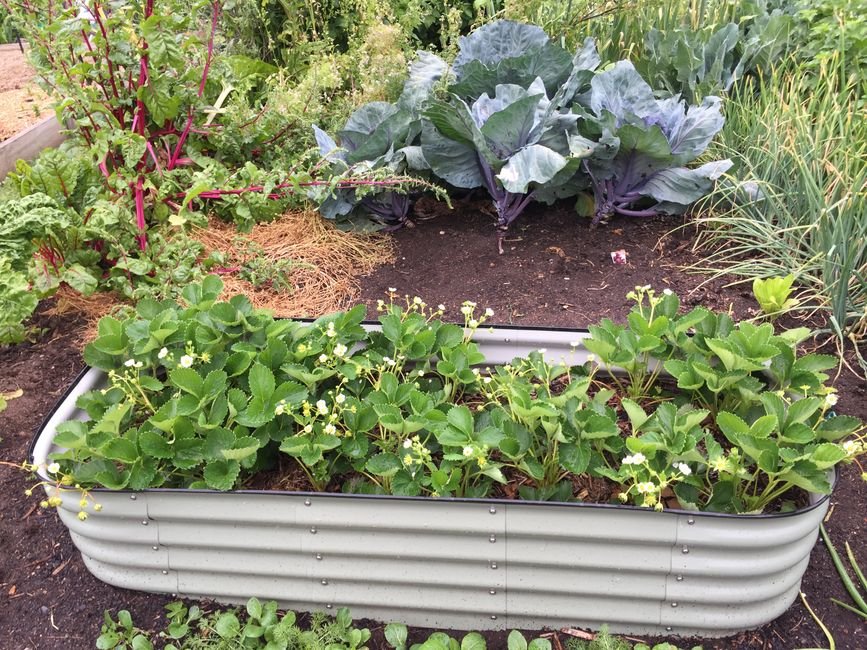
Last August I stood at the end of the driveway holding a colander of cherry tomatoes in one hand and a damp notebook in the other, trying to work out which of my four beds had actually fed me. The tomato bed was an obvious yes. The bean trellis, yes. The bed I had handed over to cabbage produced two heads, both of which sat on the counter until they went soft, because I have never once planned a week of meals around cabbage. That was the moment the whole project changed for me. I stopped asking what grows well in my yard and started asking what I eat on a Tuesday night when I am tired.
The test I apply to every bed now
My rule is narrow on purpose. A crop keeps its space if it beats the grocery store version on flavor, or if it is expensive enough at the store that harvesting it feels like getting away with something, or if it produces steadily over weeks instead of dumping everything at once. Anything that fails all three gets cut, no matter how healthy the plant looked or how proud I was of it in June.
That last criterion is the one small gardens ignore. A single row of something that ripens all in one week is not a food supply, it is a chore. I only have so much counter space and I do not want to spend a Sunday processing a crop I did not really want in the first place. Steady beats spectacular when the whole garden is smaller than a parking space.
Cherry tomatoes, the crop I never regret
Cherry tomatoes are the one thing in my garden that is not really comparable to what I can buy. Store cherry tomatoes are bred to survive a truck, and you can taste the compromise. A warm one off my own plant, eaten standing up in the yard, is a different food item. My wife stopped asking me to justify the tomato bed after her first August here.
They also keep giving. One plant will hand me a handful every couple of days for weeks, which is exactly the rhythm I want. I have had big slicing tomatoes crack open after rain and split in ways that made half the crop useless. The small ones shrug that off. If someone with one sunny corner asked me what to plant, this is the only answer I would give without hedging.
Green beans, because the plant does the work
Pole beans go on a trellis, climb without any help from me, and hand back food for a long stretch if I keep picking. That last part matters more than anything I do at planting. The summer I went away for ten days and came home to beans the size of my finger, the plant essentially stopped. It had made seed, so it was done. Now I pick every two or three days even when I do not need beans, and I give the extras away.
The flavor gap versus the store is smaller here than with tomatoes, honestly. What sells me is the vertical footprint. Beans grow up, so they cost me almost no ground area, and the trellis shades a strip of bed where I tuck in lettuce during the hottest part of the year.
Salad greens and the cut-and-come-again math
Lettuce and other loose greens are where the money argument actually holds up. Bagged greens are expensive, they go slimy in the fridge faster than anything else I buy, and I throw out a depressing amount of them. A short row that I cut with scissors and let regrow gives me exactly the amount I want on the night I want it.
The catch is heat. My first attempt went bitter and shot up into flower stalks the week things got genuinely hot, and I had a bed of tall inedible stems. Now I treat greens as a shoulder-season crop, sowing when the weather is mild on either end of summer and hiding a later sowing in the shade of the bean trellis. Your own timing will depend entirely on where you live, so watch your own heat rather than copying anyone’s calendar.
Garlic, which grows while I ignore it
Garlic is the least demanding thing in my garden. I plant cloves in the fall, mulch them, and then essentially forget about them through the cold months. In spring they come up on their own schedule and I do almost nothing except pull weeds and cut the flower stalks off the hardneck types, which I then cook with, so even the pruning is food.
It is not a money crop. Garlic is cheap at the store. It stays in my garden because the bed is doing nothing useful over winter anyway, and because homegrown garlic has a heat and depth to it that I noticed the first time I made a simple pasta with it. The exact planting window is very regional, so ask a neighbor who grows it rather than trusting a number you read online.
What did not make the list, and why
Cabbage got cut, as mentioned. Corn got cut after one embarrassing season I have written about elsewhere. Zucchini is a strange case: it grows beautifully and produces far more than we can eat, but the plants sprawl across a quarter of a bed and I got bored of it by the second week. Producing a lot is not the same as being worth the space.
Potatoes are the one I keep going back and forth on. They store well, the kids like digging them, and the flavor of a small freshly dug one is genuinely better than a store potato. But they occupy a whole bed for most of the season and potatoes are close to free at the store. Some years I grow them in a container off to the side just to keep the peace with myself.
The list is not a recommendation so much as a record of what my particular household eats. If you hate beans, do not grow beans because a blog told you to. Track what you actually cook for one season, then plant that.