I have a photo on my phone from a Sunday in late March of a tomato seedling that is about six inches tall and roughly the thickness of a piece of dental floss. It is leaning against the edge of its cell like it is tired. I remember taking the picture because I was proud of how tall it was. That is the whole problem in one sentence.
Leggy seedlings look like progress. They are the opposite. A stretched seedling is a plant telling you it is searching for something and not finding it, and every inch it spends searching is an inch it did not spend thickening a stem or making roots.
The year I finally understood why
For two or three seasons I blamed everything except the real cause. Too warm, maybe. Wrong soil mix. Sown too early. Some vague sense that this particular packet was just weak. Then I moved the shop light down so it was almost touching the tops of the seedlings, kept it on for a long stretch each day, and the next batch came up squat and sturdy and honestly a bit ugly compared to the elegant leaning ones. Those ugly ones went on to be the best plants I had grown.
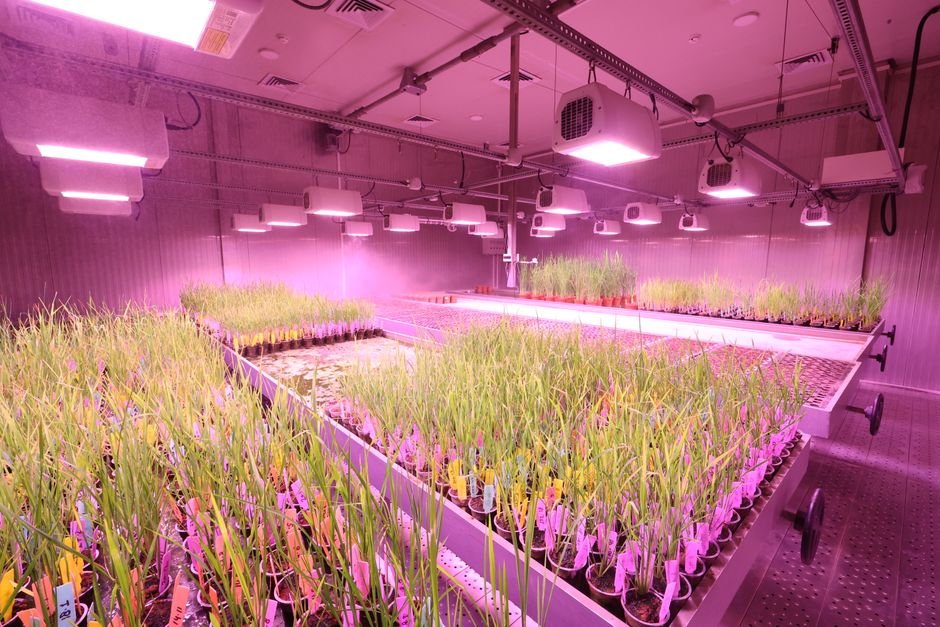
Light is nearly the entire story. Not heat, not fertilizer, not the brand of the seed. A seedling that stretches is under-lit, and the two ways to under-light a seedling are to give it a weak source or to hang the source too far away. Distance matters more than people expect, because light falls off fast. A lamp that looks bright to your eye from across the room is doing very little for a plant sitting well below it on a shelf.
The windowsill lie
Every year somebody tells me they will just use the south window. I have used the south window. It produced the dental floss tomato.
A window gives light from one side only, for part of the day, filtered through glass, at a time of year when the sun is low and the days are short. The seedling responds exactly as you would expect, by leaning at the glass and stretching. You can rotate the tray, and I did, faithfully, and what you get is a seedling that leans in a spiral instead of a straight line. It is not better. It is just decorated.
This is the one piece of gear I would tell a weekend gardener to actually buy. Not a heat mat, not a fancy tray system, not the little plastic dome. A cheap shop light on a chain, hung low, on a timer so you cannot forget it. Mine cost less than a couple of nursery transplants and it has outlasted most of my other garden purchases.
Wind, or a hand
The second thing that made a visible difference is embarrassingly low-tech. Seedlings that grow in perfectly still indoor air never learn to hold themselves up. Outside, a plant gets pushed around constantly, and it answers by building a thicker stem.
So I run my hand across the tops of the tray a few times whenever I walk past. Lightly, the way you would brush a hand across tall grass. A small fan on low, pointed past the tray rather than directly at it, does the same job more consistently and also keeps the surface of the mix from staying damp. That last part matters more than the stem strengthening, which brings me to the thing that actually killed my seedlings.
Damping off, which arrived right on cue
Two years ago I lost most of a tray of peppers in about four days. They did not wilt from the top, which is what I expected. They fell over. Each one pinched in and went brown right at the soil line, like someone had taken a tiny pair of scissors to it, and then the whole seedling toppled and lay there looking otherwise green and fine.
That is damping off, and once it is running through a tray you are not saving that tray. What I have changed since: I water from the bottom and let the surface dry between waterings, I keep air moving, I take the plastic dome off as soon as seeds have come up rather than leaving it on because it looks tidy, and I do not reuse cells without washing them. I also stopped crowding, because a packed tray holds humidity in exactly the layer where the trouble starts.
None of that is a guarantee. It is just stacking the odds. I have had a clean tray and a bad tray in the same season on the same shelf and I could not tell you the difference.
When a leggy seedling can be saved
Tomatoes are forgiving. If a tomato has stretched, I can bury most of that stem when it goes out, and it will root along the buried portion and end up sturdier than it looked. I have rescued genuinely sad tomatoes this way and gotten a decent crop off them, though I would not claim they matched the compact ones.
Peppers and eggplant are less generous about it. They do not root along the stem the way tomatoes do, so a stretched pepper mostly stays a stretched pepper. Brassicas can be planted a bit deeper, up to the seed leaves, and that helps. A stretched lettuce or a stretched herb is usually not worth the shelf space it is occupying.
My honest rule is that if a seedling is badly stretched and it is early enough that resowing is still an option, I resow. It feels like going backward. It is not. Six weeks of babying a weak plant costs me more than the two or three weeks I lose starting over, and the plant I end up with is one I actually want in the bed.
What I look for now
The seedling I want is shorter than I expect it to be, with the space between the seed leaves and the first true leaves looking compressed rather than drawn out. The stem should look thick enough to be slightly out of proportion with the plant. Color should be a solid green rather than that pale yellow-green that reads as fragile.
Growing that plant instead of the tall pretty one changed my summer more than any other single thing I have done indoors. The sturdy ones go outside and just start growing. The leggy ones go outside and spend three weeks recovering from a childhood I gave them.