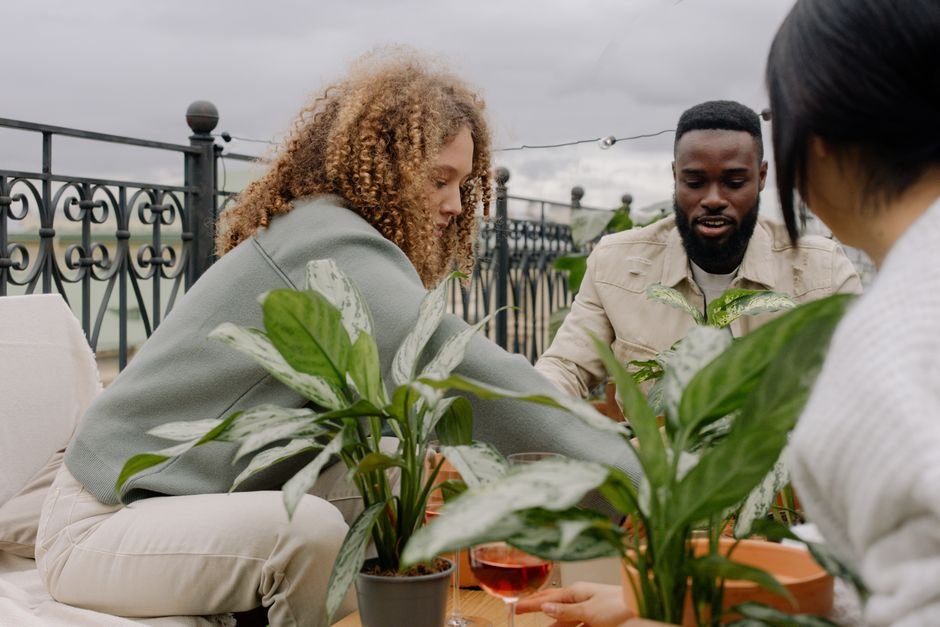
Last April I carried a bag of potting mix up two flights of stairs, set it down on the balcony, and stood there working out where anything new could possibly go. The railing had pots along it, there were two larger tubs in the corner, and the rest was the space I need to actually open the door. That was the moment I stopped planning by what I wanted to grow and started planning by what fits.
Four seasons in, I have a fairly short list of things that reliably give me food out there, and a longer list of things I have retired. Here is both, honestly.
The balcony, described plainly
It is a narrow rectangle off the living room, long enough for a chair and a few pots and not much else. The railing side gets sun in the morning and into the middle of the day, then the building next door takes it. The end nearest the wall is in shade for most of the afternoon. I have never put a number on any of this. I just know which end I put the tomato in and which end I put the mint in, and I worked that out by watching where plants leaned.
Everything I grow is in a pot. There is no bed, no ground, no borrowed corner of a yard. That single fact shapes every choice below.
Herbs are the only things that clearly pay their rent
If I could only keep one category it would be herbs, and it would not be close. Thyme, rosemary, parsley, chives, and mint have all done well for me, and mint in particular does so well that it lives alone in its own pot where it cannot bully anything.
The reason herbs work in small spaces is not that they are easier. It is that a small amount of them is a useful amount. A handful of parsley finishes a dish. A few sprigs of thyme change a pan of potatoes. When the whole harvest from a pot is small, you want a crop where small still counts, and herbs are the clearest case of that I have found.
Basil I grow every year and still find fussy. It wants the sunniest spot I have, it sulks in cold snaps, and it bolts if I look away. I keep growing it because I like it, not because it is reliable.
Salad leaves, if you eat them small
Cut and come again leaves are the second thing that works. I sow a wide shallow pot fairly thickly, let it fill in, and cut across it with scissors rather than waiting for whole heads. It regrows a few times before it gets tired and I start again.
The honest limit is that this is a side salad crop, not a salad supply. A pot that size does not feed two people a proper bowl on demand, and the regrowth slows every time you cut. In high summer it also bolts, and bitter leaves are a real thing, not a rumor. I now sow in spring, take a break in the hottest stretch, and sow again for autumn.
Tomatoes and chilies: possible, slow, small
I grow cherry tomatoes in the biggest tub I own, on the sunniest end of the railing, and I get tomatoes. I want to be careful here, because this is where small space growing gets oversold. The plant produces, but it produces at a pace where I am eating them a few at a time as they ripen, not gathering a bowl for a sauce. In a bad year with a cool, cloudy stretch, it produces less.
Chilies have actually been my better performer of the two. The plants stay smaller, they seem to cope with a pot better, and a chili is a thing you use one of. Same principle as the herbs. When the yield is low, grow the thing where low still works.
What I have stopped trying
Root vegetables are off my list. I tried carrots in a deep pot and got roots that were fine but few, and the pot was tied up for months to produce something I can buy in a bag for very little. Same conclusion with potatoes. It works, people do it, and it was genuinely fun the once. It was not worth the two largest containers I own for an entire season.
Squash and courgette are out on size alone. The plants are enormous relative to my balcony, and a single one would take the whole space. Corn is not even a discussion. Anything that needs a group of plants to pollinate properly is a bad fit for a place that fits one.
How I decide now
My rule has drifted toward two questions. Does a small quantity of this still make a difference to a meal, and is the plant small enough that one pot holds a real plant rather than a stunted one. Herbs pass both. Leaves pass the first and mostly the second. Chilies pass. Tomatoes pass on a good year with the biggest pot I have.
What I have given up is the idea that the balcony is a small farm. It is not, and pretending otherwise mostly made me disappointed in April and resentful in August. It is a place where a few things grow well and get eaten fresh, and once I sized my expectations to that, I enjoyed it considerably more.