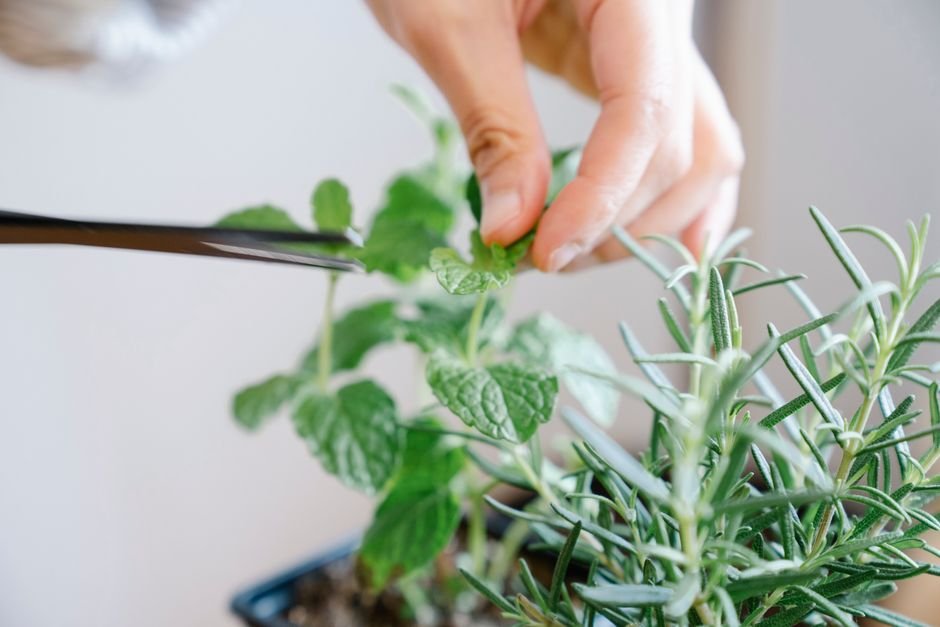
I found mint coming up in the middle of the garlic in April. Not near the garlic. In it, between two rows, a neat little green shoot with that unmistakable square stem. The mint I planted was about four feet away and on the other side of a path. That was the morning I understood what people had been trying to tell me.
Everyone warns you about mint. I had read the warnings. I had nodded along at the warnings. Then I bought one small pot of spearmint, looked at how modest it was, and thought that the warnings were probably about some other, more aggressive kind of person’s garden.
The year I put it straight in the bed
It went into the sunny end of the bed in spring, next to some lettuce, because the label said full sun to part shade and I had a gap. For about ten weeks it behaved exactly like a normal plant. It grew, I picked it, it grew back. I remember being pleased with myself. I told a friend that people exaggerate about mint.
What I could not see was that mint spends its first season doing most of its work sideways and underground. Above the soil it looked like one tidy clump. Below it, it was running pale white stems out in every direction, just under the surface, and every few inches those stems were setting down a new node ready to become a new plant next spring.
How far it actually went
By the second spring I had mint in four places. The original clump, which was now more of a mat. A patch under the edge of the lettuce. Something coming up in the gravel of the path, which impressed me even as it annoyed me. And the one in the garlic.
By the end of that second summer it had also gone under a low timber edge into the bed with the beans. The runners are shallow, mostly in the top few inches, which is the only good news in this story. It is not going down deep. It is going wide, fast, and it does not care what is already there.
The lettuce that year was noticeably worse. I do not think mint did anything mysterious to it. I think mint simply took the water and the room, the way any vigorous plant will when it has decided the whole bed belongs to it.
Digging it out, twice
The first removal was a Saturday. I lifted the main clump with a fork, shook the soil off, and felt good about it. That was naive. Every fragment of white runner I left behind was a new plant waiting for spring, and there were a lot of fragments, because runners snap when you pull them.
The second removal, the following spring, was the real one. I took everything out of that end of the bed, went through the top layer of soil by hand in sections, and picked out every white stringy piece I could find. It took most of a morning and my back let me know about it. I sifted the soil I removed rather than composting it, because I did not fancy finding mint in the compost heap and then in every bed I spread it on.
I still get the occasional shoot in that bed. Three years later. I pull it while it is small and I no longer take it personally.
The pot rules I follow now
Mine lives in a plain plastic pot, the biggest I had spare, sitting on a paving slab. The slab matters more than the pot. A pot sitting on soil is not a barrier, because mint will happily send a runner out of the drainage hole and into the ground below, and then you are back where you started with the added insult of having thought you solved it.
I lift the pot occasionally to check underneath. I also cut it back hard three or four times a season, right down to a few inches, which keeps it from getting leggy and woody and keeps the new growth coming. Mint does not resent hard cutting. If anything it comes back thicker and better tasting.
Every second spring I tip the whole thing out, cut the rootball roughly in half with a spade, throw one half away, and put the other half back with fresh compost. Otherwise the pot becomes solid root and the leaves get small and thin.
What I actually do with it in the kitchen
The honest answer for a while was not much, and that is the second lesson. One mint plant produces vastly more than one household uses. I make tea with it, a handful of leaves in a mug, and I use it in a cucumber and yoghurt thing that goes with almost anything off the grill.
The best use I have found is chopping a genuinely large amount into a grain salad. Not a garnish quantity. A cup of chopped mint into a bowl of cooled bulgur with lemon, oil, spring onion, and far more parsley than feels reasonable. That dish eats through mint at a rate that finally justifies the plant.
It is also good torn over sliced tomatoes, and it does something nice with peas. Beyond that I run out of ideas by July and start giving bunches away.
Would I plant it again
Yes, but only exactly as I have it now. In a pot, on a slab, cut back hard, split every couple of years, and never in an open bed for any reason at all. If someone tells me they have a spot where it can run freely and it will not bother anything, I now assume they have not met it yet.
The wider lesson stuck with me beyond mint. In a small weekend garden, the plants that fail are annoying, but the plants that succeed too well are the ones that actually cost you time. I check labels for the word vigorous now and I read it as a warning rather than a promise.