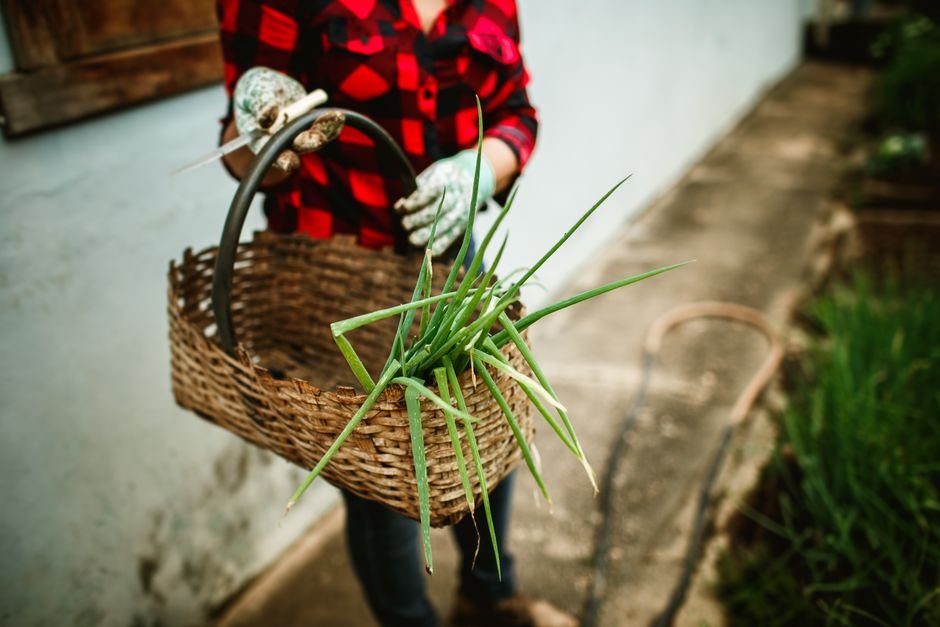
My brother-in-law asked me at a cookout whether the garden saves us money, and I gave him the answer people give, which is a vague yes and a change of subject. It bothered me enough that in February, with nothing growing and nothing to do, I sat down at the kitchen table with the seed order, the receipts I could find, and the rough sense of what came out of the beds the previous year, and I actually worked through it.
The answer is no, mostly. Not for most crops. And I ordered seeds the same week anyway, which is what this piece is about.
I actually did the math one winter
The costs are not the seeds. Seeds are almost nothing, and a packet lasts me a couple of seasons. The costs are everything around them. Compost, which I buy by the bag because my own pile does not produce nearly enough. Replacement bed lumber when a corner rots out. Drip line fittings. The occasional transplant I buy because I failed to start something in time. A roll of row cover. Stakes, twine, a new hose after the old one split.
Against that, I know roughly what my beds produce, and I know roughly what the same produce would cost at the store. In a good year it is close to a wash. In the year I replaced two beds it was clearly negative. And that is before counting my time at any value whatsoever, which is the assumption that makes the whole exercise a bit dishonest.
The crops where the math is not even close
Potatoes, onions, winter squash, and cabbage are all cheap at the store, store for a long time, and take up a lot of my very limited space for a long stretch of the season. There is no scenario where my four small beds beat commercial agriculture on cost for these. Commercial growers have scale, machinery, and land, and the price at the store reflects that.
Sweet corn belongs in this group too. The farm stand near me sells it in high summer for so little that my one embarrassing corn season worked out to an absurd cost per ear once I counted the bed space. If cost per pound is your metric, growing staple storage crops in a small backyard is the worst possible use of the ground.
Where growing at home actually wins
There are exceptions, and they are consistent. Fresh herbs are the clearest one. A plastic clamshell of basil at the store costs real money, holds a small amount, and goes black in the fridge within days. A basil plant in a pot by the door supplies me all summer and costs almost nothing.
Salad greens are the second. Bagged greens are expensive and they are the single thing I throw away most often, because they turn slimy fast and I never get through a bag. Cutting exactly what I need on the night I need it eliminates that waste entirely, and the waste was where the money was going.
Cherry tomatoes are the third, though the argument there is really about quality rather than price. Good ones are not cheap, and mine are better than the good ones.
What I am actually buying with the time
Once I accepted that the garden is not a savings account, it became easier to see what it actually is, which is how I spend Saturday mornings. I am outside, alone, doing something with my hands that has a visible result by evening. I do not look at a screen for two hours. My back hurts a little afterward in a way I do not mind.
If I put those hours toward paid work instead I would be further ahead financially and worse off in every other way. Nobody asks whether a fishing trip or a set of golf clubs pays for itself. The garden happens to also produce food, which makes it look like it should be evaluated as an economic activity, and that framing is a trap I fell into for a couple of years.
The freshness gap is real, and it is narrow
The one advantage I have over any store is time between picking and eating. For most vegetables that advantage is small. A carrot is a carrot whether it was pulled this morning or last Tuesday. Potatoes, onions, and squash are designed by nature to sit around, so there is essentially no gap at all.
But for a short list, the gap is enormous. Sweet corn and peas start converting sugar as soon as they come off the plant, which is why corn eaten within the hour tastes like a different vegetable. Tomatoes never ripen properly off the vine, so any tomato picked early for shipping is permanently behind. Lettuce and basil are about texture and how fast they decline. That is a narrow list, and it is exactly the list of things worth my beds.
The answer I give people now
What I tell neighbors who ask is this. If your goal is to lower your grocery bill, a garden is a slow and unreliable way to do it, and you would do better shopping the sales and cooking more from scratch. If your goal is to eat four or five specific things at a quality you cannot buy, and to spend some hours outside doing something physical, then a garden is very good at that and the food is close to a bonus.
I plant beds every spring knowing the ledger does not work out. There is a moment in late July, standing in the yard eating tomatoes off the plant with dirt on my hands, that is not available at any price at the store. That is what I am growing. The beans and the lettuce are just what comes with it.