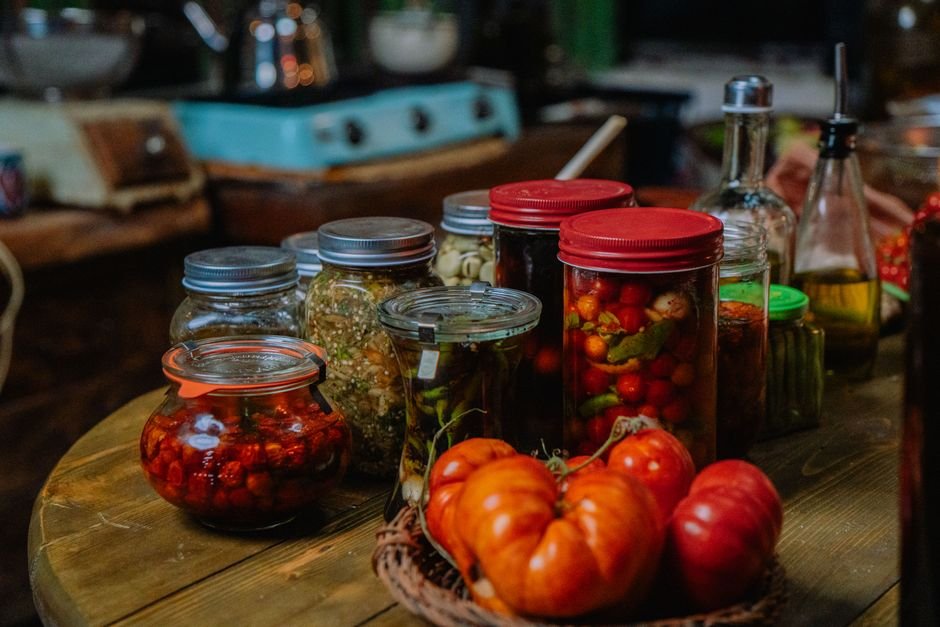
There was a tomato on my cutting board in July that was better than the other forty I grew that year. Same bed, same watering, no explanation. I ate most of it standing at the counter with salt, and then I scraped the seeds out of the last wedge into a jar, because it seemed insane to have a plant like that and let it be a one-time event.
That jar is how I got into seed saving, which I want to describe honestly, because a lot of what is written about it makes it sound like either a sacred practice or a trivial one, and it is neither.
The easy tier, which is where I would start anyone
Beans and peas are almost embarrassingly simple. Leave some pods on the plant past the point where you would want to eat them, let them dry until they rattle, shell them out, and you have next year’s seed. The only real trick is patience, because the pods have to dry properly on the plant or they will not keep.
Tomatoes are the second easy one, with an extra step I will get to. Lettuce is easy if you can stand letting a plant bolt and go ugly in the middle of a bed, which I find harder than the actual saving. Peppers are easy in the sense that the seeds are just sitting there in a ripe fruit, though I get better results from fully ripe red ones than from ones I picked green.
That tier covers most of what I actually eat, which is why I have never pushed much past it.
The fermenting bit, which sounds worse than it is
Tomato seeds come coated in a gel that discourages them from sprouting inside the fruit, and it seems to keep them from storing well too. The standard fix is to put the seeds and pulp in a jar with a splash of water and leave it on the counter for a few days until it grows a film on top and starts smelling like a bad decision.
Then you pour off the floating stuff, rinse what sinks, and dry it. The seeds that sank are the ones worth keeping. The whole process is genuinely unpleasant in a small way and takes about two minutes of actual work spread over a few days.
My failure here was drying. I spread a batch on a paper towel, which they welded themselves to permanently, and I ended up planting little squares of paper towel the following spring. Some of them came up. Now I dry on a plate or a piece of window screen, and I break up clumps with a fingernail once they are dry.
What I stopped saving, and why
Squash was the first thing I gave up on. I saved seeds from a good zucchini and grew out something the following year that was recognizably a zucchini’s cousin and not a good one. Squash cross-pollinates enthusiastically, and unless you are isolating flowers by hand, what you save is a lottery ticket. Cucumbers and melons have the same problem.
The other thing to know is hybrids. If a packet says F1, the seeds you save from that plant will not reliably give you the same plant. You get a scattering of the parents’ traits, some of which are fine and some of which are not what you signed up for. This is not a moral failing on the plant’s part, it is just how hybrids work, and it explains a lot of disappointing years for people who did nothing wrong.
So I save from open-pollinated things I like, I do not save squash, and I buy fresh seed for anything where I care about consistency.
Storage, which is where I have lost the most
My first year I put everything in labeled envelopes in a kitchen drawer, which is roughly the worst place in my house. Warm, and it swings humid every time somebody boils water. The following spring my germination was poor across the board and I blamed the seeds.
Seeds want cool, dark, and dry, and dry is the one people get wrong. They also need to be genuinely dry before they go into any container, because a seed sealed up damp is a seed that molds. Now everything goes into paper envelopes, the envelopes go into a lidded box, and the box lives somewhere cool that is not the kitchen. I write the crop and the year on every envelope, because I have absolutely stood in March holding an unlabeled envelope of small brown seeds with no idea what they were.
Testing instead of guessing
I will not quote you numbers for how long any seed stays good, because the numbers I have seen vary wildly and my kitchen drawer proved that storage matters more than the crop does. What I do instead takes ten minutes.
Count out a small number of seeds, ten is easy math, fold them into a damp paper towel, put that in a bag somewhere warm, and check after several days. Whatever fraction sprouts is roughly what that envelope is going to give you. If most of them go, sow normally. If half go, sow thickly. If almost nothing goes, throw the envelope out and buy fresh, because a bed full of gaps in May is a much more expensive problem than a packet of seeds.
This one habit has done more for my results than any amount of reading about how long seeds last.
Why I keep doing it
Partly money, though not much, since seeds are not expensive. Mostly it is that the plants I save from are the ones that did well in my particular yard, in my particular soil, with my particular inconsistent watering. Over a few seasons that has to count for something, though I am not going to overclaim it.
And partly it is the tomato. I have grown that one out for two summers now from the seeds in that jar. It is not identical every year and it has not been quite as good as that first one on the cutting board. But it is close, and I made it happen with a spoon and a jam jar on a July evening, and that is a satisfying thing to know about your own kitchen.