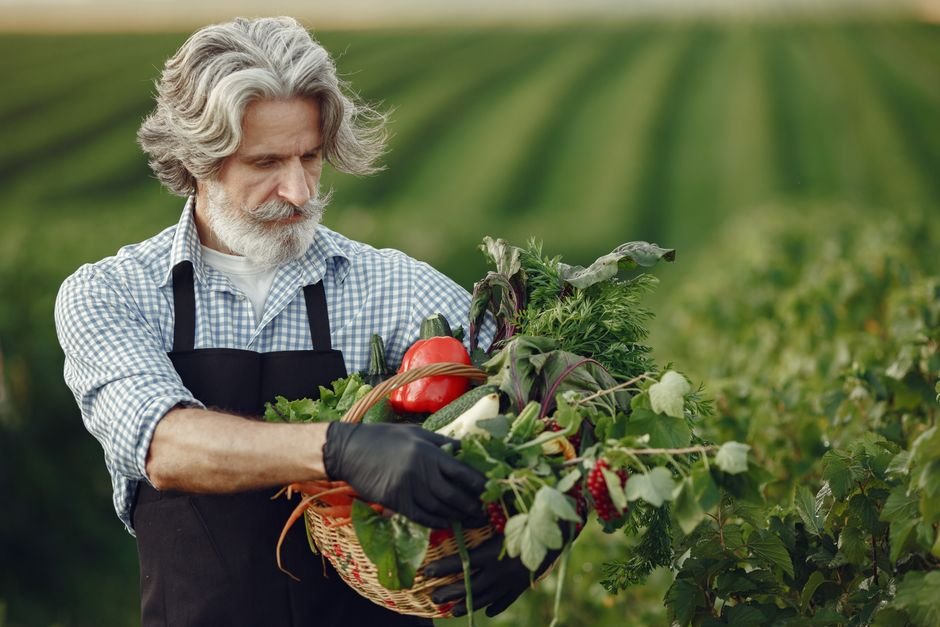
Last August I pulled an eggplant off the plant because it was the biggest thing out there and I wanted to show it to somebody. Glossy, heavy, about the length of my forearm. I sliced it, salted it, cooked it slowly in more olive oil than I want to admit, and it tasted like a mouthful of crushed aspirin. Bitter the whole way through, with seeds that had gone tan and slightly hard, so every bite had a faint gritty click in it. My partner ate two pieces, set the fork down, and said very kindly that there was also bread.
That eggplant had been ready about nine days earlier. I had walked past it every single one of those days and thought the same thing each time. A little more.
Early and late are not the same size of mistake
It took me three seasons to understand that these two errors are not symmetrical. If I pick something early I lose size, and usually a bit of sweetness. A green bean picked early is a small green bean. A cucumber picked early is a crisp little cucumber. A zucchini picked early is the best zucchini I will eat all year. The penalty is that I got less food than I could have.
If I pick something late, I lose the food entirely. The late bean is leathery with lumpy seeds pushing through the pod, and no amount of butter fixes the texture. The late cucumber is hollow and bitter near the stem end and turns to slime in a salad. The late eggplant is the one I described above. Late is not a smaller portion of a good thing. Late is often a different, worse ingredient wearing the same skin.
So I have quietly moved my whole approach toward picking early. I will take the slightly undersized thing on purpose. I lose maybe fifteen percent of the volume across a season and I stop throwing food in the compost, which is a trade I will make every time.
The seed packet is a starting gun, not a finish line
For a long time I treated days to maturity like an appointment. Sixty five days from transplant meant I would go look on day sixty five. That number is an average from someone else’s field, in someone else’s soil, with someone else’s water schedule. My beds run about a week behind it in a cool spring and a week ahead of it in a hot one. Two seasons ago I had peppers hit color three weeks past the number on the packet and I had convinced myself the plants were sick.
Now I use the number only to tell me when to start paying attention. Around that date I begin actually looking, and after that the plant is the only source I trust.
The ones I can read now
Some crops became legible after enough repetitions. Zucchini I judge by how it feels when I close my hand around it. If the skin still gives a little under my thumbnail it comes in. If my thumbnail skids, it is going to be watery and seedy inside and I should have come out yesterday.
Beans I judge by looking down the pod from the side. The second I can see the individual seeds making bumps, that plant has moved on to making seeds instead of making food for me. Basil I judge by the flower buds, because once it flowers the leaves get harsh and a little soapy tasting and I would rather have pinched it back a week earlier. Cherry tomatoes I judge by whether they come off in my hand without a tug. If I have to pull, it is not ready, and if it falls off while I am reaching for its neighbor, I was late.
Lettuce is the easiest one and I still blow it. When the center of the head starts pushing upward into a point instead of staying flat, the bitterness is already on its way. There is no going back from that. I have made three or four salads out of bolting lettuce that nobody at the table finished.
The ones I still cannot read
Anything underground is guesswork for me. Carrots I have to pull one and look, and I always seem to pull the smallest one in the row. Onions I have twice harvested while the tops were still standing up green and firm, which meant they never cured properly and half of them went soft in storage by November.
Winter squash is my worst category. I have picked butternut that looked completely tan and correct and had it taste like wet cardboard because the stem was still green and the fruit was not finished. I have also left one out too long, gotten a light frost on it, and watched it collapse on the counter within a week.
Melons I have essentially given up on reading. I have thumped, sniffed, and looked at the little curly tendril nearest the fruit, and I am still roughly at coin flip odds. Last year I cut into two on the same afternoon and one was perfect while the other was pale and crunchy and tasted like a cucumber that had heard a rumor about sugar.
Picking for the pan instead of for the basket
The change that fixed the most waste was deciding what I was cooking before I walked outside. When I go out with no plan I harvest by ambition. I bring in a giant bowl of everything that looks ready, feel good about myself for about an hour, and then a chunk of it sits in the crisper drawer until it is unusable.
Now the sequence runs the other way. I decide we are having pasta with something green in it, then I go pick exactly the amount of green thing that fits in the pan. Whatever else is out there stays on the plant for another day or two, which is a much better storage container than my refrigerator. Anything that will genuinely spoil if it stays comes in and gets cooked that night, even if it means an odd dinner.
The rule that finally stuck
I have one working rule now and it is embarrassingly simple. If I look at something and wonder whether it is ready, I pick it. The wondering is the signal. That is the moment where the plant has crossed into the range where it is worth eating, and every extra day I spend waiting is a day I am gambling for a marginally bigger vegetable against the risk of no vegetable at all.
I still lose that bet a few times a season. There is a squash out there right now that I know I should have taken on Sunday. But the aspirin eggplant only happens once a year now instead of once a month, and dinner has gotten noticeably better for it.